Case
2019 - 2024
BO standardkessel
baumgarte gmbh
20.000m²
Beveren


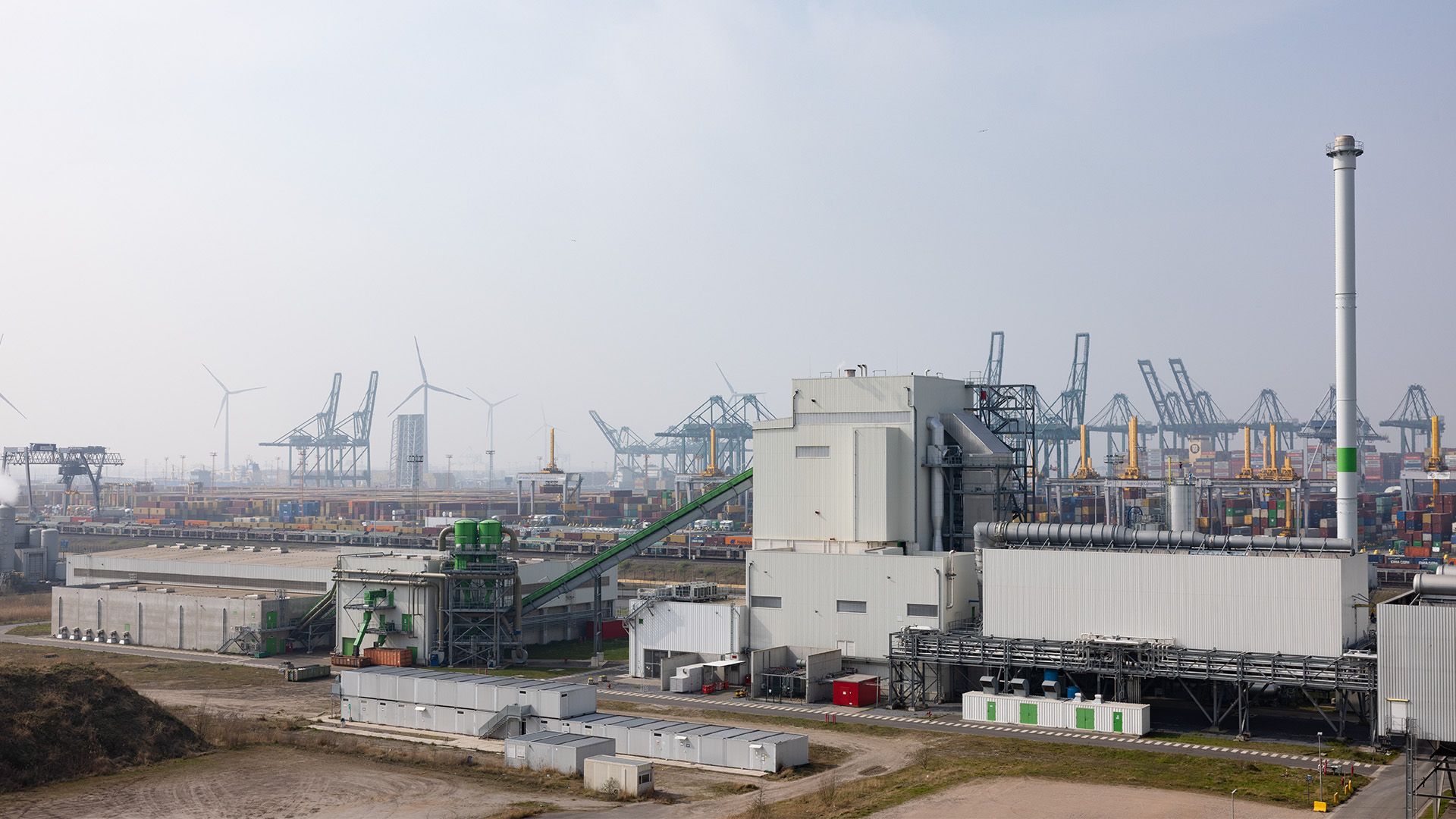
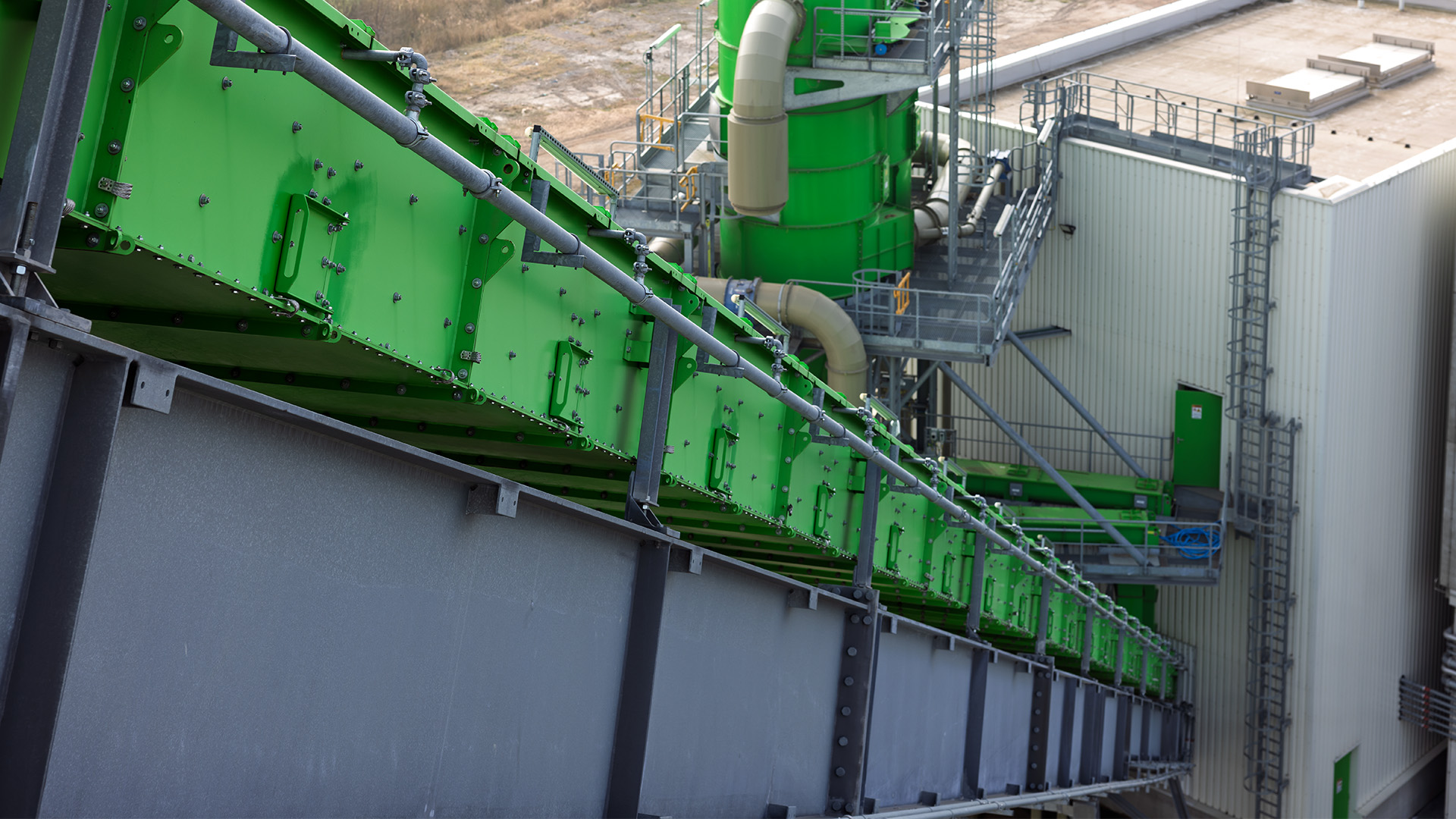
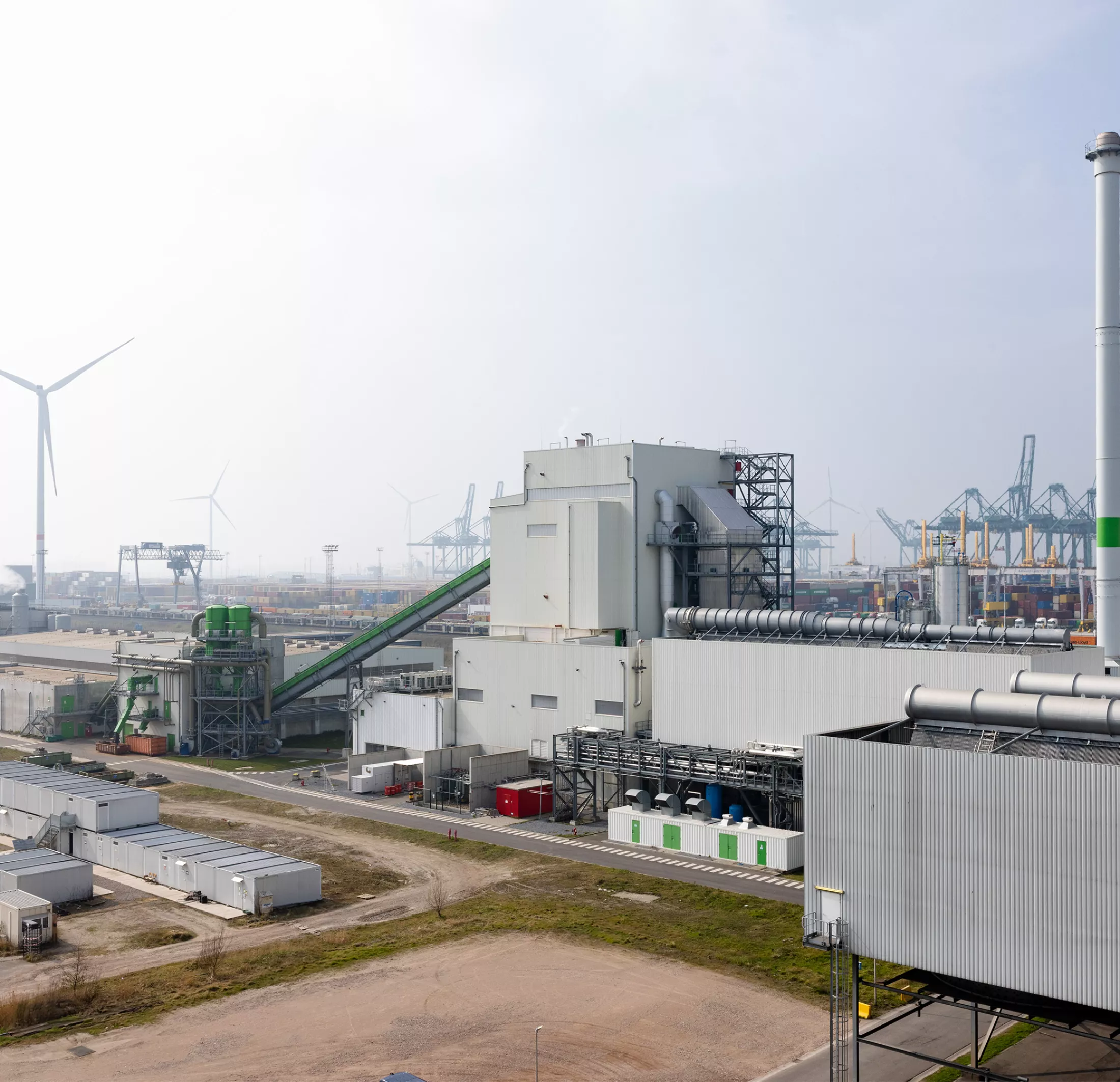
Indaver and Veolia are building the new E-Wood processing facility for non-recyclable wood waste in the Waasland Port. The released energy is converted into electricity and steam for industry. The green energy project contributes to the realization of the Flemish climate objectives through its CO₂ neutrality. The time pressure on the construction works is very high, from the permitting process to the delivery. Through constant re-engineering and flexible responses to new situations, we help make the realization of the project possible within the shortened construction time.
BM Engineering Group has been increasingly involved in very large industrial projects in recent years. At the Indaver site in Doel, Indaver and Veolia are jointly investing 100 million euros in the expansion of energy production. E-Wood uses non-recyclable wood waste as fuel, such as treated wood or woody material from composting facilities. This wood waste is stored under cover on the 2-hectare site and thermally processed using fluidized bed technology. The facility also features intensive flue gas cleaning.
The building owner engaged the German company Standardkessel Baumgarte for the turnkey execution of the project. This firm is part of the globally operating Japanese JFE Engineering Group. Because Standardkessel Baumgarte indicated that they wanted to collaborate with a local engineering firm for this project, a Japanese delegation traveled to the headquarters of BM Engineering in Kortrijk in the summer of 2020. Our teams, working methods, and references were thoroughly reviewed. Green light quickly followed and the collaboration could effectively begin.
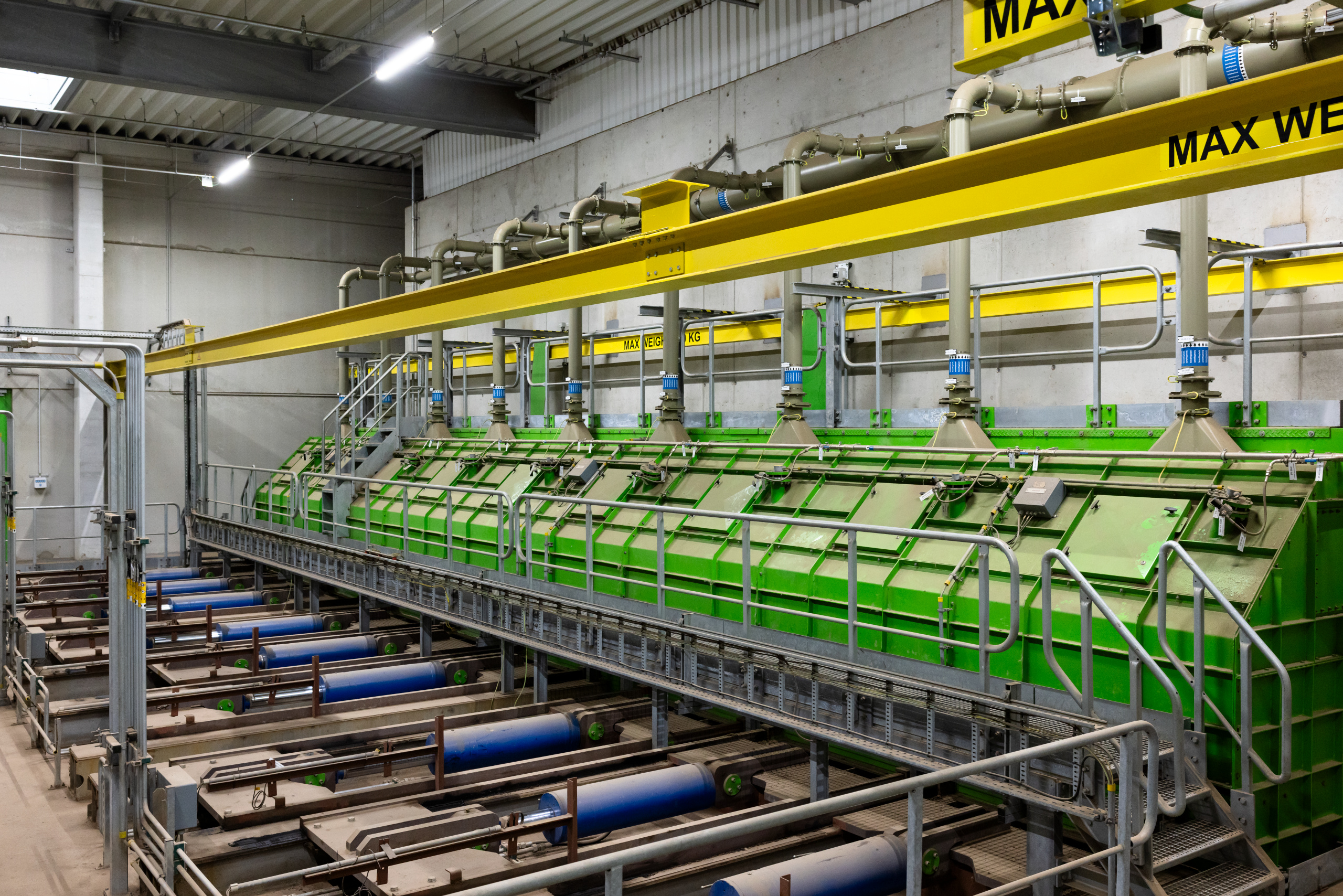
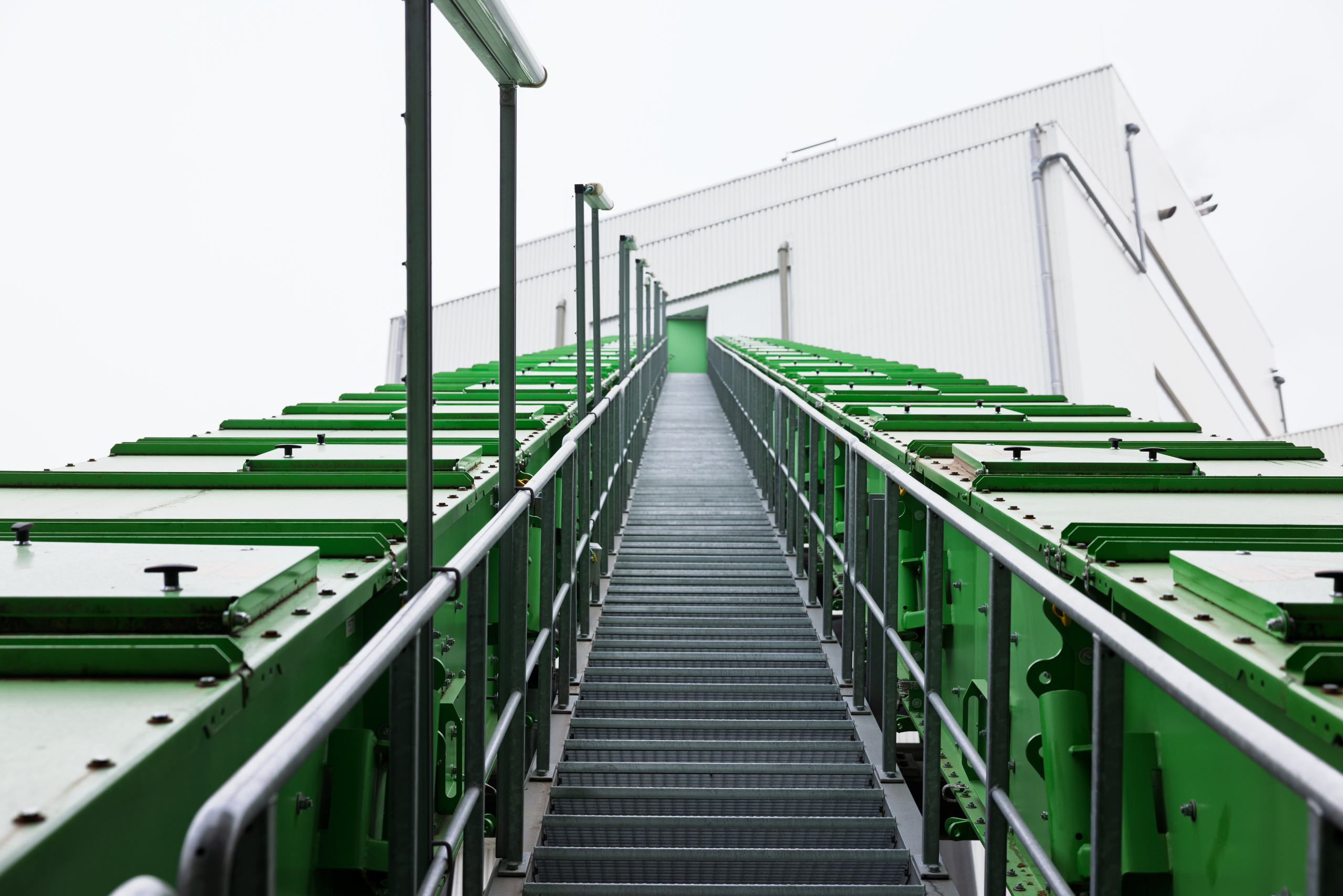
Trailers will dump the wood waste onto a moving floor in the storage hall, after which it falls into a basement following pretreatment/cleaning and is scooped onto a transport system for further processing. The energy plant consists of 4 main processes, each with a separate installation: the boiler, the turbine, the condenser, and the flue gas purification. In addition to the buildings for these processes, a large high-voltage and utilities building with the operator room is also constructed.
Our Civil Engineering department was responsible for the design of all foundations, sewerage and surrounding infrastructure, and all above-ground concrete structures on the E-Wood site. The fact that the engineers from Standardkessel Baumgarte could not travel to Belgium due to the coronavirus pandemic, and that all engineering consultations had to take place entirely online, created additional challenges.
E-Wood is entirely founded on prefab driven piles. This was an explicit choice by Standardkessel Baumgarte, after they had not achieved the desired result with screw piles in a previous project. However, the pile driving on the Indaver site was not allowed to cause vibrations in the existing installation. Therefore, De Waal was commissioned to drive 10 piles as a test. An external party carried out vibration measurements during this process. These yielded a positive result, after which the driving of the remaining piles could begin.
Another sensitive point was the lifting operation to mount the gigantic boiler in its correct position in the boiler building. This required a large assembly crane and other heavy equipment – such as multi-wheelers. To make this operation possible, we designed a temporary support platform inside the boiler house on which these loads could be transferred.
In the technical building, our Industrial Plants department provides the complete HVAC installation. The cooling is a VRF system with air-water outdoor units and standard indoor units (wall-mounted), and is 100 percent redundant. Except for the high voltage and the 'production' low voltage, we also design all electrical provisions across the entire site. This includes the general power distribution between distribution boards, power outlets, and service boxes. The general lighting of the buildings and the outdoor environment, as well as the emergency lighting across the entire site, is also part of this. In addition, we provide the power supply for all gates and doors and all ancillary components such as compressed air containers. The low-voltage installations across the entire site also come from our digital drawing boards.
Because wood waste and wood dust are highly flammable, enormous attention is paid to the fire protection installation. It is designed fully in accordance with international FM Global standards. On the E-Wood site, two fire safety buildings are constructed: prefab concrete buildings containing the main components of all fire protection systems such as panels, control units, buffer tanks, valves, and electrical components. The fire safety buildings are connected to all buildings and conveyor belts on the site, and to the ring main (diameter 250 mm) that is installed around the site and connected to the existing main line of the main sprinkler installation.
Depending on the location, various types of fire detection systems are provided. The general fire detection system is equipped with point detectors, and depending on the application of a building or space, it switches to aspiration detection that detects smoke or soot particles more quickly. A linear detection system is applied to the conveyor belts, as well as spark detection during the transport of wood waste.
The suppression systems also operate according to various principles, linked to the fire detection systems. A misting installation ensures that dust formation from the stored wood is prevented. Outside, water mist suppression is applied at the transformer, and foam suppression under the turbine and the oil tank ensures that in case of leakage, the oil does not catch fire or the fire does not spread further.
In the technical-electrical rooms, gas suppression with an inert gas is used, so that damage to the electrical components in case of fire remains limited, and the fire is extinguished locally. Sprinkler installations are also provided across the entire site, with all types being applied: wet, dry, water curtain, pre-action, and deluge. In this way, both the equipment and the steel structure per building are protected against fire, and it also protects against fire spreading between two buildings.
The execution period was exceptionally short for a project of this scale, which meant that a large part of the civil engineering had to be done while construction work was already underway. Because we often did not yet have all the information during the pre-engineering phase, we continuously carried out re-engineering during the construction process to find new solutions each time. In this way, the delivery date of E-Wood could still be met.
• E-Wood (Indaver and Veolia) – building owner
• Standardkessel Baumgarte – EPC contractor
• Willemen Infra – contractor for preparatory earthworks
• De Wael Solid Foundations – contractor for foundation piles
• Cosimco – contractor for foundations and storage shed
• BM Engineering Group – Civil Engineering + Industrial Plants