
Case
2022-2026
NV BESIX S.A.
Civil Works
Infrastructuur en riolering
Onderbouw technische installaties
Industriële plants
Brugge
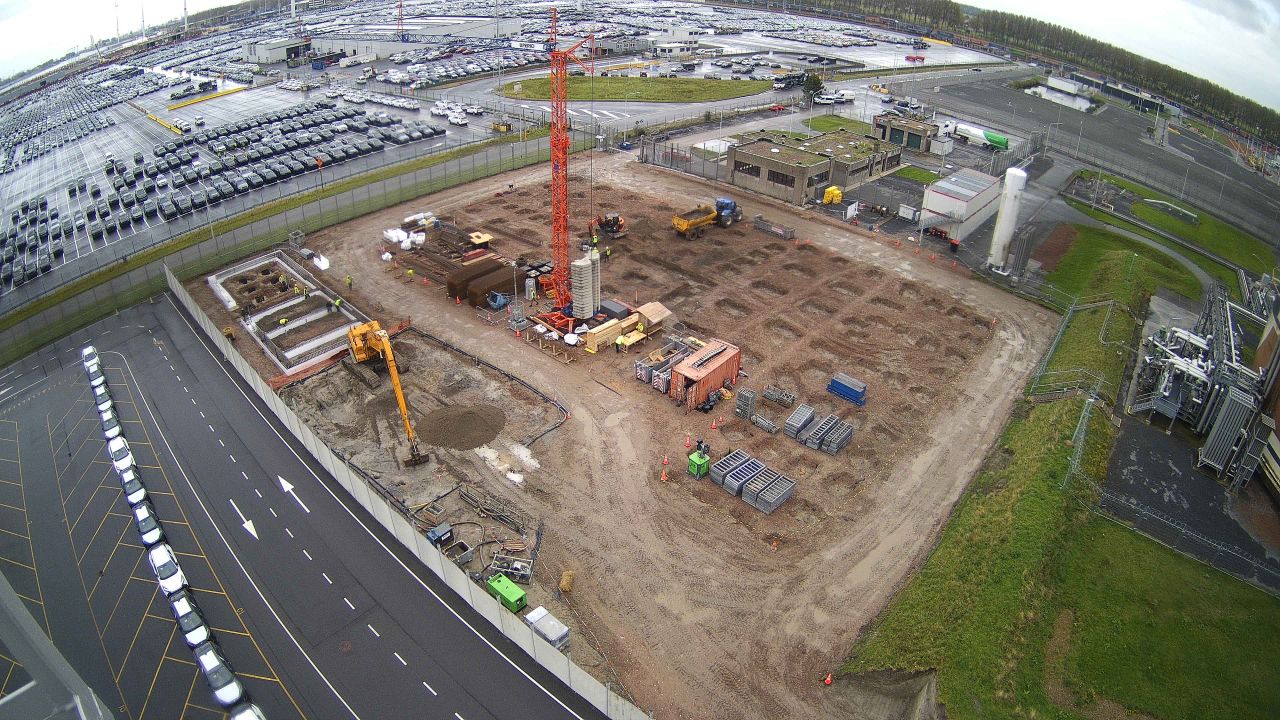
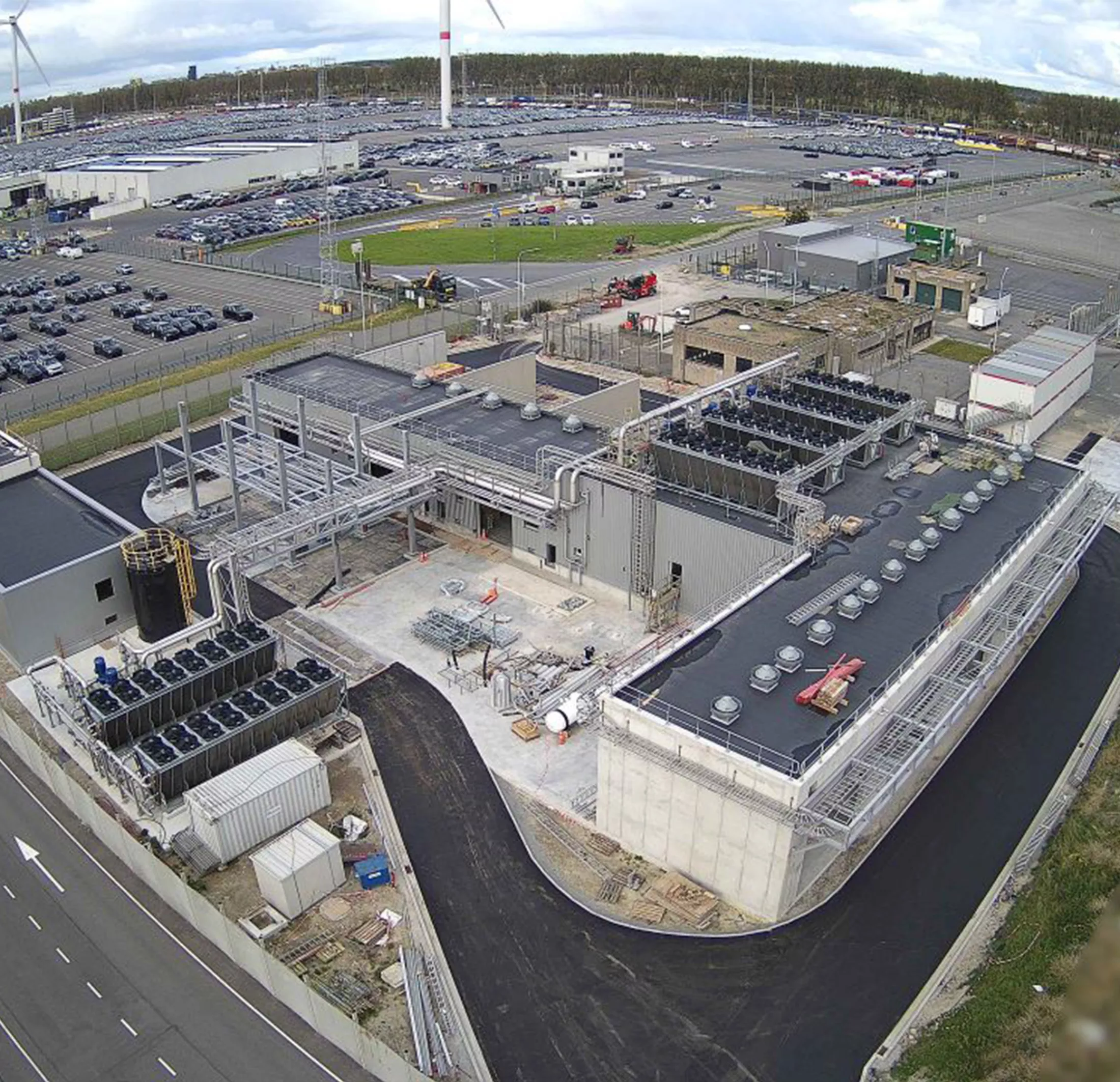
With Hyoffwind, the port of Zeebrugge has a Belgian first. It is the first large-scale production facility for green hydrogen in our country. The electrolysers with a capacity of 25MW will produce 3,700 tons of green hydrogen annually, resulting in an expected CO2 reduction of 25,000 tons per year. BM Engineering Group was responsible for the design and detailing of the foundations, technical buildings, infrastructure & sewerage, and the building services on the site. Hydrogen is a particularly explosive gas, making safety crucial in the design of this project.
The Civil department of BM Engineering Group was responsible for the design of the buildings on the Hyoffwind site. The most eye-catching is the compressor building with the HP and LP compressors. Based on a dynamic explosion study by a specialized partner (Gexcon), BM Engineering Group tailored the dimensioning of the structure to potential explosion loads. The roof structure also required special attention. Because hydrogen rises in the event of a leak, the structure was designed so that no cavities are created in which the gas can accumulate. This required close coordination between the Civil department and the Industrial MEP engineers.
In addition to the buildings, we also designed the complete site infrastructure. One large anti-explosion wall protects the surrounding businesses in the event of a safety incident. For the design of the roads and sewerage, a less conventional infiltration facility was chosen. Rainwater infiltrates via prefab U-channels into the sub-foundation, where it is buffered. Only when it is saturated is the excess water discharged to the sewer system.
The technical installations at Hyoffwind were also designed with maximum operational safety in mind. Our Industrial Plants department provided the necessary ventilation (with emergency power supply for the ATEX roof ventilators) for the electrolyser, (LP-HP) compressor rooms with natural supply (which can be automatically shut off via damper valves linked via PLC to the automation of third-party hydrogen production), and a climate control system for a controlled temperature within the technical spaces.
We also designed the electrical installations at Hyoffwind, including indoor and outdoor lighting, emergency lighting, and electricity distribution. In addition, we developed a redundant data network, which increases the operational reliability of the technical installations.
The fire protection includes a sprinkler tank with pumps and an open deluge system in accordance with FM Global, which in the event of an incident or excessively high temperature can continuously cool the hydrogen trailers for a full hour, supplemented by a hydrant loop across the site. The access control was linked to fire detection and hydrogen detection, so that evacuation and safety procedures are automatically coordinated via a fire matrix.
The sewerage system also takes possible incidents into account. In the event of a leak of hydrogen-related chemicals, automatic shut-off valves can immediately interrupt the discharge, so that liquids are captured in a retention zone. They therefore cannot enter the soil.
The technical principles were fully developed and coordinated between the Civil and Industrial Plants teams, so that structures, piping, and technical installations connect seamlessly. This integrated approach is reflected, among other things, in the 3D detailing of penetrations in the concrete structures. Each opening was individually designed, dimensioned, and provided with the correct fire-resistant sealing, tailored to the type of pipe and the material running through it. The execution dossier we prepared for this achieves a high level of detail, down to the level of formwork and reinforcement plans and P&ID diagrams with tagging for all utilities.
The Hyoffwind production facility currently has a capacity of 25 MW, but the entire design is prepared for a later expansion to 100 MW. This way, additional installations can be integrated without major structural modifications.
Client: Virya Energy, in collaboration with HyoffGreen and Messer
Contractor: consortium BESIX, BESIX Environment, John Cockerill Hydrogen
Civil and Industrial Plants: BM Engineering Group